
Captivity and Its Echoes
The ThicketThis flow connects the novel's multiple forms of captivity, showing how physical confinement produces lasting psychological and social consequences.
increasing Bearing strength in each event
 decreasing
Bearing strength in each eventdecreasingQuarantine Captivity
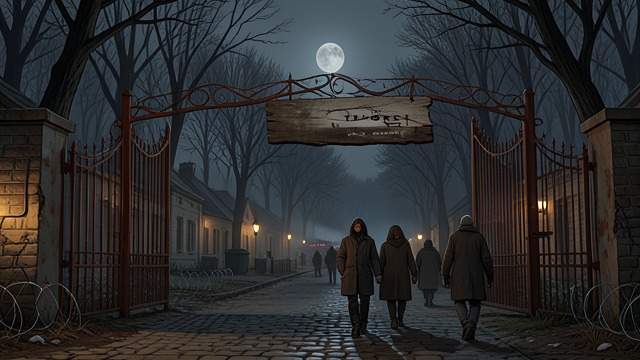
A Town Closed In
Boundary
Hinge Gate is sealed to prevent Smallpox epidemic from spreading.
Contradiction
The quarantine protects public health while trapping survivors away from aid and mobility.
Parallel
This civic confinement anticipates the private captivity suffered by Lula Parker.
Brothel Confinement
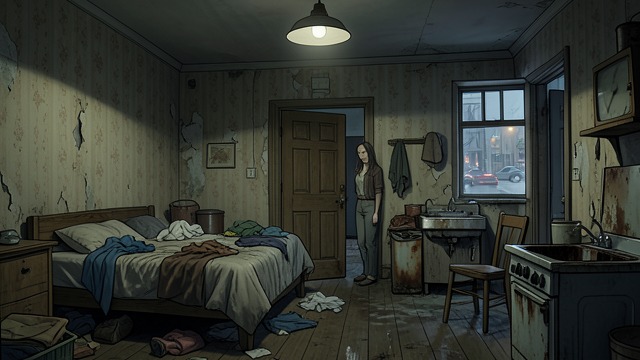
A Life Owned by Steve
Control
Steve treats Jimmie Sue and the other women as property rather than workers.
Illusion
Electric lights and indoor plumbing disguise exploitation as comfort.
Escape
Jimmie Sue's departure begins when she recognizes that convenience is not freedom.
Lula's Enclosure

Service Under Threat
Demand
Lula Parker's survival depends on performing labor for men who have already violated her.
Erasure
The gang attempts to reduce her identity to usefulness and sexual availability.
Resistance
Her continued attention to self and memory prevents complete psychological possession.
Bear on a Rope
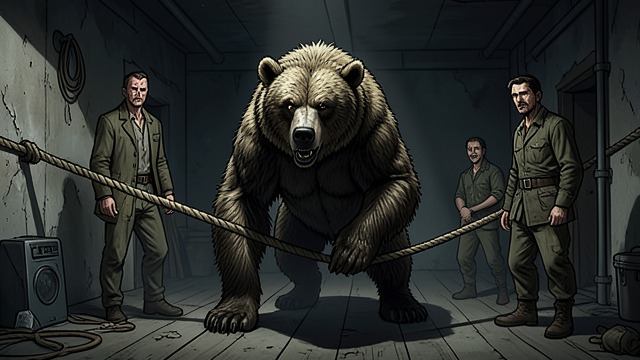
Captivity Made Visible
Display
The chained bear embodies helpless strength exploited for amusement.
Recognition
Jack Parker and Shorty see that the gang's cruelty is directed toward any vulnerable living thing.
Release
Cutting the rope turns captivity into unpredictable retaliation.
Afterlife of Captivity

Survival Without Restoration
Memory
Lula Parker remains changed after leaving the gang.
Relationship
Jack Parker accepts that loving her means accepting a history he cannot erase.
Continuation
Marriage, family, and work offer a future, but not a claim that trauma has vanished.
during the Hinge Gate epidemic
before Jimmie Sue meets Jack Parker
during her captivity with the gang
before the camp shootout
after Lula's return home
